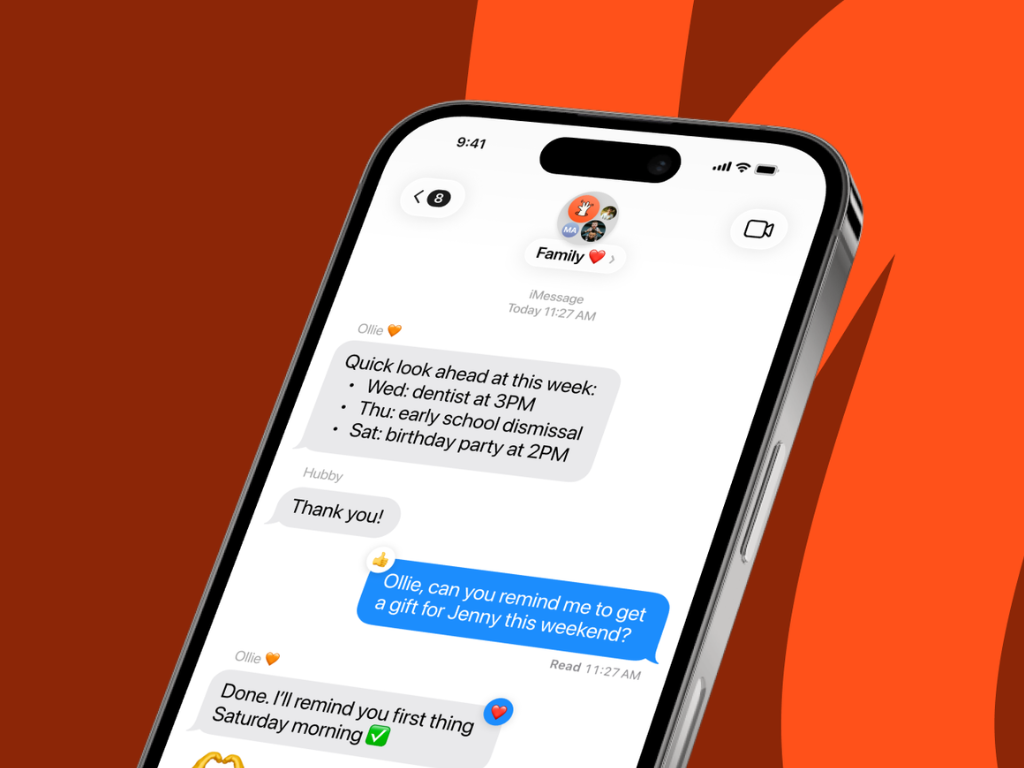
The New Calm at the Dinner Table: How AI Is Redefining Family Mealtime
Every family has lived this moment: the clock hits 6 p.m., everyone’s hungry, and no one knows what’s for dinner. You open the fridge, spot half an onion, a leftover chicken breast, and five different opinions. That small moment of indecision, repeated nightly, is exactly what AI is starting to solve.
Across kitchens in 2025, parents are trading spreadsheets, recipe binders, and “what do you want tonight?” debates for something smarter: assistants that learn their routines, remember what’s in the pantry, and even predict when grocery staples are running low. As featured in The Washington Post, intelligent meal-planning apps like Ollie are “turning weeknight chaos into calm by personalizing dinner around a family’s real life, not the other way around.”
This isn’t about robots cooking dinner. It’s about digital helpers that listen, adapt, and relieve families of one of their most constant stressors: deciding, every single day, what to eat.
From endless recipe scrolling to intelligent meal planning
For years, families relied on recipe blogs and Pinterest boards, collecting inspiration that rarely translated to the realities of a Tuesday night. Now, AI turns those scattered ideas into complete meal plans, balancing nutrition, preferences, time, and ingredients.
When you open Ollie, you don’t start with a blank page. The app automatically creates a weekly menu around your schedule and tastes. It knows you love pasta on Mondays, but keep Fridays light. It recognizes your 30-minute cooking limit on soccer nights and your weekend breakfast traditions.
Instead of hunting for recipes, you review a plan that already feels familiar. You can tap “Replace” to swap meals, “Modify” to adjust ingredients, or “Cooked it” to teach Ollie what worked. Over time, your digital kitchen companion builds a rhythm that mirrors your household.
How AI learns what your family actually likes
Every household eats differently, and AI finally reflects that. Where older apps asked you to choose between “healthy” or “budget-friendly,” modern systems like Ollie absorb hundreds of subtle signals, such as what you’ve cooked, what you skipped, which meals earned a ⭐ rating, and even the photos you upload of your fridge.
If your child suddenly refuses broccoli, you can type “no broccoli this week,” and Ollie remembers. If you tell it, “Plan two Italian dinners,” it responds instantly, creating new recipes aligned with your pantry and preferences.
This personalization isn’t just convenience; it’s the next frontier in family nutrition. The Cleveland Clinic notes that “consistent, balanced meals tailored to household needs build healthier long-term habits than restrictive diet plans.” AI helps families achieve exactly that, sustainable, everyday eating patterns rather than occasional resets.
By connecting dietary goals with actual grocery behavior, Ollie bridges the gap between intention and action. You’re not forced into someone else’s version of “healthy.” Ollie learns your family’s version and quietly makes it easier.
The rise of the “hands-off” kitchen
Once, meal planning and grocery shopping were two entirely separate tasks. You’d decide what to cook, then spend an hour writing a list and another hour buying everything. Today, AI closes that loop.
When Ollie finalizes your menu, it automatically generates a categorized shopping list for produce, pantry, and dairy that syncs with delivery partners like Instacart and Amazon Fresh. Items already in your kitchen can be unchecked with a tap. The result: fewer last-minute store runs and less wasted food.
Imagine opening your phone on Sunday morning and seeing a complete grocery list already built from your week’s meals, ingredients grouped neatly, quantities pre-calculated, everything ready for delivery or pickup. That’s what Ollie means by a “smart shopping list.” It turns meal planning into a background process so you can focus on eating together, not organizing logistics.
For families managing food allergies, busy workweeks, or limited budgets, this automation is transformative. Grocery planning becomes as simple as approving Ollie’s suggestions. The invisible mental load, remembering what’s low, cross-checking recipes, worrying about duplicates, quietly disappears.
Reducing food waste while improving nutrition
Beyond convenience, AI is helping families waste less and eat better. When you mark meals as “Cooked,” Ollie tracks ingredient usage to avoid over-buying next time. If you upload a photo of your fridge, it suggests meals that use what’s already there, like turning leftover spinach and rice into a quick stir-fry.
The average American household throws away 30 percent of the food it buys. AI-based tools are uniquely positioned to change that by connecting real-time grocery inventory with recipe generation. The environmental and financial benefits are enormous: fewer forgotten vegetables, fewer last-minute takeout orders, and less guilt at the end of the week.
And because Ollie uses trusted nutrition data powered by Edamam, every recipe includes full nutritional breakdowns: calories, macros, and heart-health indicators. It’s not about counting grams or tracking numbers but about awareness.
Trust, transparency, and the ethics of AI in the kitchen
Whenever AI enters intimate spaces like the kitchen, privacy becomes part of the recipe. Families want smarter tools, not invasive ones. That’s why Ollie builds transparency into its design. Preferences, allergies, and family member profiles are stored securely. You control how much data the system uses, and you can reset it entirely if you wish.
Researchers and ethicists emphasize that AI tools must balance helpfulness with user autonomy. In 2025, responsible design means creating systems that support human decision-making, not replace it. Ollie does exactly that: it recommends, but you decide. It plans, but you confirm. It learns, but it never lectures.
For parents teaching kids about food choices, that balance matters. Children see AI not as a machine but as part of the family routine, one that helps them learn portioning, meal variety, and respect for food.
Why personalization is redefining “healthy eating”
A generation ago, “healthy” meant following one universal rulebook: low-fat, low-carb, or low-sugar. Today, AI recognizes that every household is different. Ollie learns that your partner prefers higher-protein lunches, your teen loves spicy food, and you’re experimenting with Mediterranean dishes.
Because it adjusts over time, Ollie makes healthier eating feel natural instead of forced. It’s not a plan you follow; it’s a system that follows you. That’s why families who use AI-driven meal planners often stick with balanced routines longer, not because they’re trying harder, but because it finally fits.
In short, personalization is the quiet force reshaping nutrition. It replaces guilt with awareness and effort with design. You don’t need to reinvent how your family eats; you just need a tool that understands how you already live.
The emotional shift: from decision fatigue to dinner joy
When technology handles the repetitive parts of meal planning, something unexpected happens: families rediscover the joy of eating together. Without the stress of constant micro-decisions, parents feel lighter. Conversations return to the table. Kids help cook because dinner no longer starts in chaos.
That’s the subtle magic of Ollie: it turns an everyday task into a shared ritual. With weekly plans pre-built and groceries organized, you can focus on flavors, laughter, and connection. The reward isn’t just saved time; it’s reclaimed attention.
Looking ahead: the future of family eating
The next era of home cooking will likely blend real and digital intelligence even further. AI won’t just suggest meals; it will collaborate with kitchen appliances, track freshness in your fridge, and align meal plans with your health data (if you choose).
Yet even as technology evolves, the heart of the movement remains human. Families still crave comfort, variety, and connection, and that’s what Ollie’s design prioritizes. It’s not a futuristic gadget; it’s a gentle hand guiding your everyday life, making dinnertime simpler, smarter, and more joyful.
A Smarter Way to Nourish What Matters Most
Dinner shouldn’t feel like a daily challenge. It should feel like the most human moment of the day, where everyone pauses, connects, and refuels. AI is quietly making that possible by reducing the noise, remembering the details, and turning technology into a kitchen companion instead of another task.
With Ollie, your family’s habits become the recipe. Your week becomes predictable in the best way, flavorful, efficient, and flexible. So maybe the question isn’t “What’s for dinner?” anymore. Maybe it’s “What will Ollie plan for us tonight?”
Want smarter dinners? Let Ollie plan them for you.